The UK government has announced a major overhaul of its immigration policy, marking what Prime Minister Keir Starmer has called a “clean break from the past.” The proposed changes—targeted at reducing net migration and increasing control over who gets to live and work in the UK—could reshape the pathway to permanent settlement for thousands of migrants in the coming years.
Here’s what’s changing, why it matters, and what migrants should do now to prepare.
Key Changes at a Glance
1. Settlement Timeline Extended to 10 Years
Under the proposed rules, most migrants will no longer be eligible for Indefinite Leave to Remain (ILR) after five years. Instead, the default path to settlement will now require 10 years of lawful residence in the UK.
This change would make the UK’s settlement route one of the most restrictive among high-income countries.
2. Tougher English Language Requirements
Language requirements will be raised across all immigration routes. For the first time, adult dependents—such as spouses or parents—will also be required to prove basic English proficiency.
The goal, according to the government, is to promote integration, employment, and protection from exploitation. However, critics warn this may pose challenges for families with dependents who struggle with language acquisition.
3. No More Automatic Settlement
Currently, many migrants on long-term visas can apply for settled status after five years. Under the new system, settlement will no longer be automatic. Instead, migrants must actively “earn the right” through continuous residency, integration efforts, and compliance with visa terms.
4. Fast-Track Settlement for High-Value Skills
Workers in key growth sectors—such as nursing, engineering, and AI—may benefit from an accelerated path to settlement. These workers will be prioritized as part of the government’s strategy to support Britain’s economic and social development.
5. End of Overseas Recruitment for Care Workers
One of the more controversial measures is the decision to end recruitment of foreign care workers. Employers in the care sector will now be required to hire from within the UK or extend the visas of foreign workers already present.
This change is expected to reduce immigration by up to 50,000 people over the next year.
Why Is the UK Making These Changes?
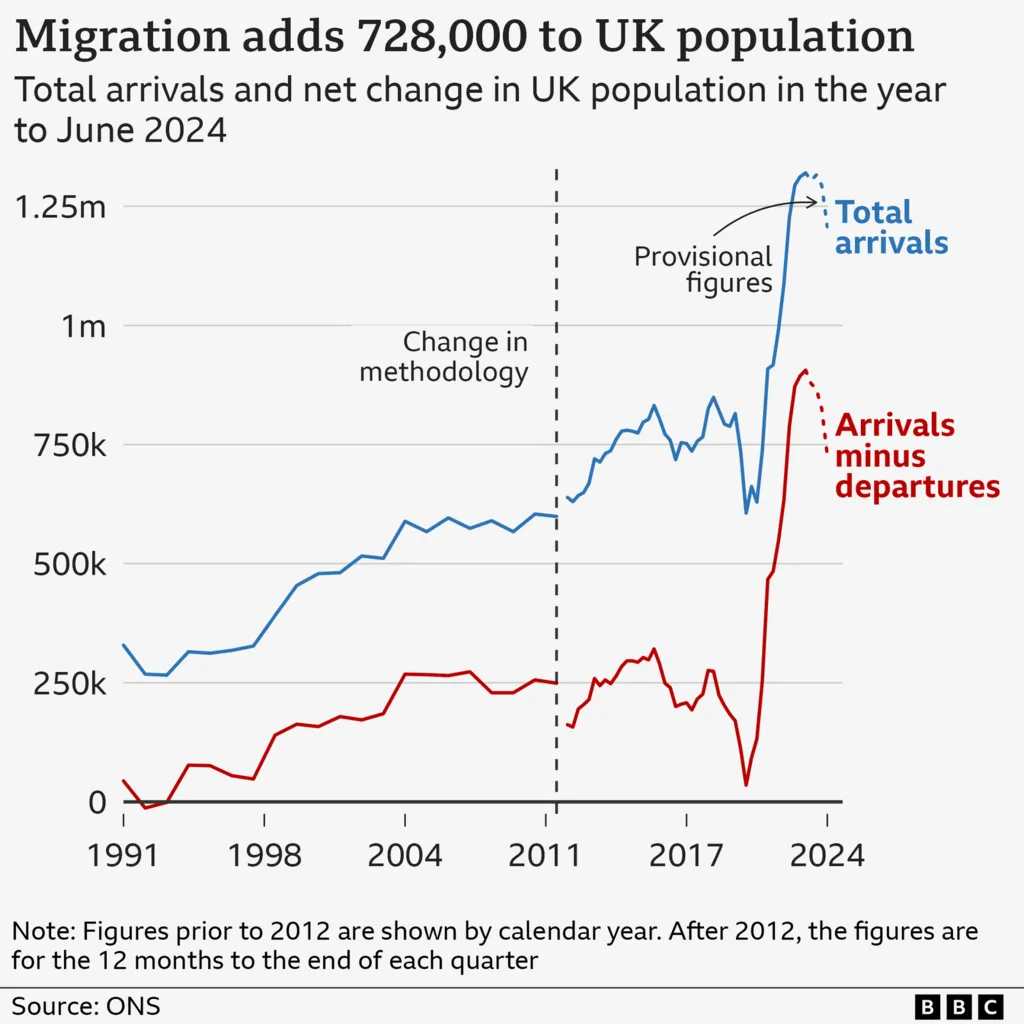
The reforms come as part of Labour’s effort to address public concern over high migration numbers. Net migration hit a record 906,000 in mid-2023 and remained high at 728,000 by year-end.
Starmer criticized industries for relying on “imported cheap labour” and said the country must invest in domestic training and apprenticeship programs instead. The changes are intended to encourage employers to hire and train UK workers, reduce long-term dependency on foreign labour, and ensure migration works “in the national interest.”
Implementation Timeline
Many of the proposed measures—particularly those requiring changes to primary legislation—are unlikely to take effect before the 2026 parliamentary session.
The full details of the reform will be outlined in the Immigration White Paper, expected to be published in the coming weeks. It will consolidate months of internal research and set the direction for future immigration control in the UK.
Expert Reactions and Criticism
-
Migration experts have noted that the extended settlement period may generate more visa fee revenue for the Home Office, as migrants on temporary visas must renew them frequently.
-
Labour critics argue the reforms are too little, too late. The Conservative Party has promised to push for a binding migration cap, and Reform UK says their local election gains are proof that public sentiment favors stricter controls.
-
Human rights advocates warn that stricter language tests could divide families and disadvantage vulnerable groups.
-
Oxford University’s Migration Observatory reports that language proficiency is strongly linked to employment outcomes, but notes that only a small percentage of migrants report having poor English skills.
What Should Migrants Do Now?
If you’re planning to move to the UK—or currently on a temporary visa—now is the time to:
✅ Begin preparing for stricter language requirements
Even dependents will need to pass English tests under the new system.
✅ Review your long-term migration strategy
A 10-year plan may now be necessary if you’re aiming for settlement or citizenship.
✅ Monitor industry-specific changes
If you work in care, healthcare, engineering, or tech, keep an eye on new rules affecting recruitment and settlement eligibility.
✅ Stay informed
New policies and timelines will be clarified in the upcoming White Paper. Legislative delays may affect when these rules take effect.
Final Thoughts
The UK’s immigration policy is undergoing significant transformation. While the government claims the reforms will make the system more “controlled, selective, and fair,” the reality is that pathways to permanent residence are becoming longer, more demanding, and more selective.
Migrants should act now to adapt their plans and ensure they meet new criteria as they emerge.
Need help navigating the new UK immigration landscape?
Golden Pages readers can contact us for tailored advice on long-term planning, visa options, and how to future-proof your settlement journey.